It reads like a Silicon Valley thriller: two billionaires, a broken promise, and a lawsuit worth up to $134 billion US — all centred on a question that affects every one of us who uses AI tools today.
On April 27, 2026, jury selection began in the Musk vs. Altman OpenAI trial at a federal courthouse in Oakland, California. This isn’t just tech gossip. This case could reshape the rules around how AI companies are built, funded, and held accountable — and that has real implications for every person who’s ever typed a prompt into ChatGPT or any other AI tool.
Here’s what’s actually happening, why it matters, and what you need to know — no buzzwords, no hype.
Who Are the Players?
Before diving into the legal weeds, let’s set the scene.
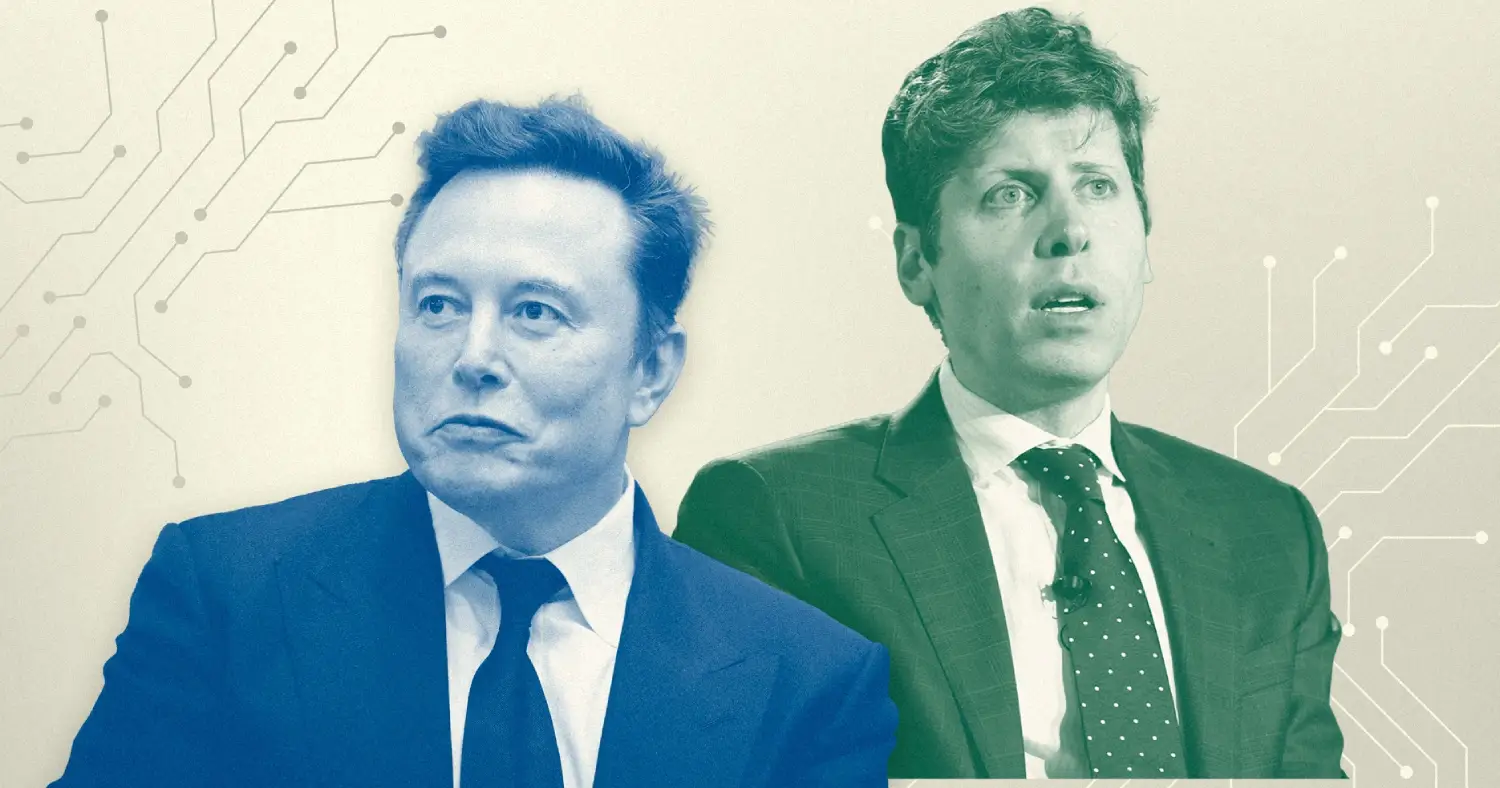
Elon Musk — the world’s wealthiest person, founder of Tesla, SpaceX, and X (formerly Twitter), and the man behind xAI (the company that makes the Grok chatbot) — was one of the original co-founders and funders of OpenAI. He contributed more than $44 million CAD to get it off the ground in its earliest years, making him the biggest individual early backer.
Sam Altman — CEO of OpenAI and the public face of ChatGPT — is the man Musk is suing. Altman didn’t become a household name until ChatGPT launched in late 2022, but he’s now one of the most influential (and polarising) figures in the global tech industry.
Greg Brockman, OpenAI’s president and co-founder, is also named in the lawsuit.
And yes — Microsoft is in the mix too, named as a co-defendant for allegedly aiding and abetting OpenAI’s shift away from its founding mission. Microsoft has invested $13 billion USD into OpenAI since 2019.
How Did OpenAI Start — And What Was the Original Promise?
To understand what this Musk vs. Altman OpenAI trial is really about, you need to go back to 2015.
That year, Musk, Altman, Brockman, and a small group of other tech figures sat down together with a shared goal: build artificial intelligence in a responsible, safe, and open way — deliberately different from the profit-driven AI labs being run inside Google and Facebook.
OpenAI launched as a nonprofit organisation, with the stated mission to develop AI “for the benefit of humanity.” The idea was that research would be shared openly, safety would come first, and profit motives wouldn’t corrupt the mission.
Musk says he poured millions into this vision because he genuinely believed in it. He also believed, he claims, that the company would distribute its research openly and prioritise safety over shareholders.
In court filings, Musk described his motivation plainly: “The fate of civilization is at stake.”
What Changed? The For-Profit Pivot That Started It All
In 2019, OpenAI created a for-profit subsidiary. In 2025, it completed a full transition to a for-profit structure. The company is now valued at approximately $852 billion USD and is reportedly eyeing an IPO later this year.
ChatGPT currently has close to one billion weekly active users and OpenAI recently closed a $122 billion USD funding round.
From Musk’s perspective, this is a complete betrayal of the founding agreement. He says he was “assiduously manipulated” and “deceived” by promises that OpenAI would chart a safer, more open course than profit-driven tech giants.
From OpenAI’s perspective? They say Musk was part of the discussions about the for-profit shift and was well aware of it — and that he only left in 2018 after the company refused to hand him full control.
The company has been blunt: “This case has always been about Elon generating more power and more money for what he wants.”
What Is Musk Actually Asking For?
This is where it gets really interesting. Here’s a breakdown of what Musk is seeking from the Musk vs. Altman OpenAI trial:
| What Musk Wants | Details |
| Monetary damages | Up to $134 billion USD — to be returned to OpenAI’s nonprofit, not to Musk personally |
| Corporate reversal | OpenAI to be wound back to nonprofit status |
| Ouster of leadership | Altman and Brockman removed from their roles |
| Accountability for Microsoft | The tech giant held liable for aiding OpenAI’s conversion |
Musk’s lawyers have been colourful about it. In court filings they wrote: “The perfidy and deceit are of Shakespearean proportions,” calling Altman’s behaviour a “long con.”
What Does OpenAI Say in Its Defence?
OpenAI’s defence rests on a few key arguments:
- Musk knew the plan. The company claims Musk was part of conversations about needing a for-profit model to attract the kind of investment necessary to compete in the AI arms race.
- The mission hasn’t disappeared. OpenAI restructured so its for-profit subsidiary remains controlled by the nonprofit foundation. The charity still exists and holds a controlling stake.
- Musk left for control, not principle. The company says Musk walked away in 2018 after a failed attempt to merge OpenAI with Tesla and gain full control of the organisation.
- Competitive motivation. OpenAI points out that Musk has since built xAI — his own for-profit AI company — and argues this lawsuit is designed to handicap a competitor.
Who’s Testifying? The Witness List Reads Like a Tech Power Rankings
The Musk vs. Altman OpenAI trial is expected to last approximately two to three weeks, with a star-studded witness list:
- Elon Musk
- Sam Altman
- Greg Brockman, OpenAI President
- Satya Nadella, CEO of Microsoft
- Shivon Zilis, former OpenAI board member (and mother of several of Musk’s children)
- Former high-ranking OpenAI executives
The jury serves in an advisory role only — Judge Yvonne Gonzalez Rogers (a Barack Obama appointee known for presiding over the Epic Games vs. Apple antitrust case) will make the final decision on remedies. Jury deliberations are expected to begin around May 12, 2026.
Why This Trial Is Bigger Than Two Billionaires Feuding
Here’s the part that matters most if you’re someone trying to understand AI in your daily life.
The Musk vs. Altman OpenAI trial isn’t just a spat between two wealthy men — it’s a test case for AI ethics and corporate accountability. David Tuffley, a lecturer at Griffith University’s School of Information and Communication Technology, described it as “a very interesting step in the direction of clarifying just how responsible a corporation is.”
The deeper questions the trial is forcing into the open include:
Can a company change its foundational mission once it’s been publicly stated? If OpenAI promised to operate as a nonprofit, did it have a legal and ethical obligation to stay one — regardless of business pressures?
Who’s responsible when AI companies do harm? As Jeffrey Saviano, an AI ethicist who advises corporate boards and governments, put it: Why have so few companies articulated the limits of what they will tolerate from their AI systems?
Does money change everything? OpenAI argues it couldn’t raise enough capital as a nonprofit to compete. Anton Leicht, a visiting scholar at the Carnegie Endowment for International Peace, agrees the shift was realistic given how explosive AI investment has become — but acknowledges that it represents a clear tension between pushing capabilities and maintaining altruism.
The Personal Drama Behind the Legal Drama
Any good lawsuit has a backstory, and this one doesn’t disappoint.
In February 2023, Altman sent Musk an email that surfaced as trial evidence. In it, Altman told Musk: “You’re my hero… I don’t think OpenAI would have happened without you — and it really [expletive] hurts when you publicly attack OpenAI.”
Musk’s response was equal parts apology and doomsday rhetoric: “I hear you and it is certainly not my intention to be hurtful, for which I apologize, but the fate of civilization is at stake.”
The friendship, forged over a shared vision of building AI responsibly, had completely collapsed by 2024 when Musk filed the original lawsuit.
What Are the Risks for Each Side?
Risks for Musk
- Last month, a separate jury held Musk liable for defrauding investors during his $44 billion USD Twitter takeover in 2022. Another damaging verdict could be especially painful now that SpaceX is preparing for a summer IPO — potentially the largest in history.
- Musk’s own AI chatbot, Grok, has faced serious criticism for generating harmful content. That could undermine his credibility as a champion of responsible AI.
- The trial opens the door to uncomfortable questions about his 2017 Burning Man attendance and his personal relationships.
Risks for Altman and OpenAI
- If Musk wins, OpenAI’s planned IPO could collapse entirely.
- Altman and Brockman could lose their leadership roles.
- A New Yorker investigation published earlier this month painted Altman as an unscrupulous executive. Days later, a 20-year-old who feared AI’s effects on humanity was arrested after an alleged Molotov cocktail attack on Altman’s San Francisco home — underscoring just how charged public sentiment around AI leadership has become.
What This Means for Everyday AI Users in Canada
If you’re a Canadian using AI tools — whether it’s ChatGPT, Claude, Copilot, or something else — this trial has practical implications:
- Pricing and access: If OpenAI is forced to revert to a nonprofit structure, its commercial products could look very different. Pricing, features, and partnerships — including with Microsoft products like Word and Teams — could shift dramatically.
- AI safety standards: The outcome could pressure other AI companies to be more explicit and legally binding about their safety commitments.
- Regulatory ripples: Canadian regulators are already watching AI closely. A major ruling here could inform how policymakers in Ottawa approach AI governance.
A Quick Timeline: How We Got Here
| Year | Event |
| 2015 | OpenAI founded as a nonprofit by Musk, Altman, Brockman, and others |
| 2018 | Musk leaves OpenAI’s board after clashes with Altman |
| 2019 | OpenAI creates a for-profit subsidiary |
| 2022 | ChatGPT launches; OpenAI becomes a household name |
| 2023 | OpenAI board fires Altman; Altman is reinstated days later |
| 2024 | Musk files lawsuit; xAI launches Grok |
| 2025 | OpenAI completes for-profit transition; closes $122B funding round |
| April 27, 2026 | Musk vs. Altman OpenAI trial begins in Oakland, California |
The Bottom Line
Whether you’re rooting for Musk’s vision of open, safety-first AI or Altman’s argument that scale requires capital, the Musk vs. Altman OpenAI trial is the most consequential AI legal battle of our time.
It’s asking questions that the entire AI industry has been avoiding: What do we owe each other when we make big promises about powerful technology? And who gets to decide when the rules change?
Grab your popcorn — but also your notebook. This one matters.
Frequently Asked Questions (FAQs)
-
What is the Musk vs. Altman OpenAI trial about?
Musk is suing OpenAI, claiming its leaders betrayed the original nonprofit mission by converting to a for-profit company. He seeks up to $134B USD in damages.
-
When did the Musk vs. Altman OpenAI trial begin?
Jury selection began April 27, 2026 at a federal courthouse in Oakland, California. The trial is expected to last two to three weeks.
-
How much is Musk suing OpenAI for?
Musk is seeking up to $134 billion USD, though he says any damages awarded should go to OpenAI’s nonprofit arm, not to him personally.
-
Did Elon Musk actually help found OpenAI?
Yes. Musk co-founded OpenAI in 2015 and contributed over $44 million USD in its early years, making him the largest individual early funder.
-
Why did Elon Musk leave OpenAI?
Musk left in 2018 after disagreements about the company’s direction. OpenAI claims he left when the company refused to give him full control.
-
Is OpenAI still a nonprofit?
Not entirely. OpenAI’s main business became for-profit in 2025. The nonprofit foundation retains a controlling stake in the for-profit entity.
-
What is OpenAI worth today?
OpenAI is currently valued at approximately $852 billion USD and recently closed a $122 billion USD funding round.
-
Who is testifying in the Musk vs. Altman OpenAI trial?
Key witnesses include Musk, Altman, OpenAI president Greg Brockman, Microsoft CEO Satya Nadella, and former OpenAI board member Shivon Zilis.
-
What does Musk want the court to do?
Musk wants OpenAI reverted to nonprofit status, Altman and Brockman removed from leadership, and “ill-gotten gains” from the for-profit conversion returned.
-
What does OpenAI say in its defence?
OpenAI argues Musk knew about the for-profit plans, was part of those discussions, and left only after failing to gain full control. It claims the lawsuit is competitively motivated.
-
Could this trial affect ChatGPT users?
Yes. If Musk wins and OpenAI reverts to nonprofit status, its commercial products, pricing, and partnerships — including with Microsoft — could change significantly.
-
Who is Judge Yvonne Gonzalez Rogers?
An Obama-appointed federal judge for California’s Northern District, known for presiding over the Epic Games vs. Apple antitrust case. She will make the final ruling.
-
Is the jury making the final decision?
No. The jury serves in an advisory role. Judge Gonzalez Rogers will make all final decisions on any remedies.
-
Does Elon Musk have his own AI company?
Yes. Musk founded xAI, which makes the Grok chatbot available on X (formerly Twitter). OpenAI argues this is why Musk filed the lawsuit — to weaken a rival.
-
What happens to OpenAI’s IPO if Musk wins?
OpenAI’s planned IPO could be derailed or cancelled entirely if the court orders the company to revert to nonprofit status or removes current leadership.