Quick Answer: AI chatbots respond to questions. AI agents take action. Chatbots are conversational tools that answer, assist, and guide. AI agents are autonomous systems that plan, decide, and execute multi-step tasks — often without any human input along the way. Understanding the difference matters because choosing the wrong tool for your use case costs time, money, and results.
AI Agents vs AI Chatbots: Why the Confusion Exists
The terms “AI chatbot” and “AI agent” are used interchangeably in a lot of marketing material — and that’s a problem. They are not the same thing. They serve different purposes, operate differently under the hood, and are suited to very different use cases.
As AI automation tools become more embedded in how businesses and individuals work, understanding the distinction between AI agents vs AI chatbots is no longer just a technical detail. It’s a practical necessity. Get it wrong, and you’ll either underbuild (deploying a chatbot where an agent would deliver dramatically better results) or overbuild (introducing complexity your workflow doesn’t actually need).
This article explains what each one is, how they differ, where each excels, and how to decide which belongs in your toolkit.
What Is an AI Chatbot?
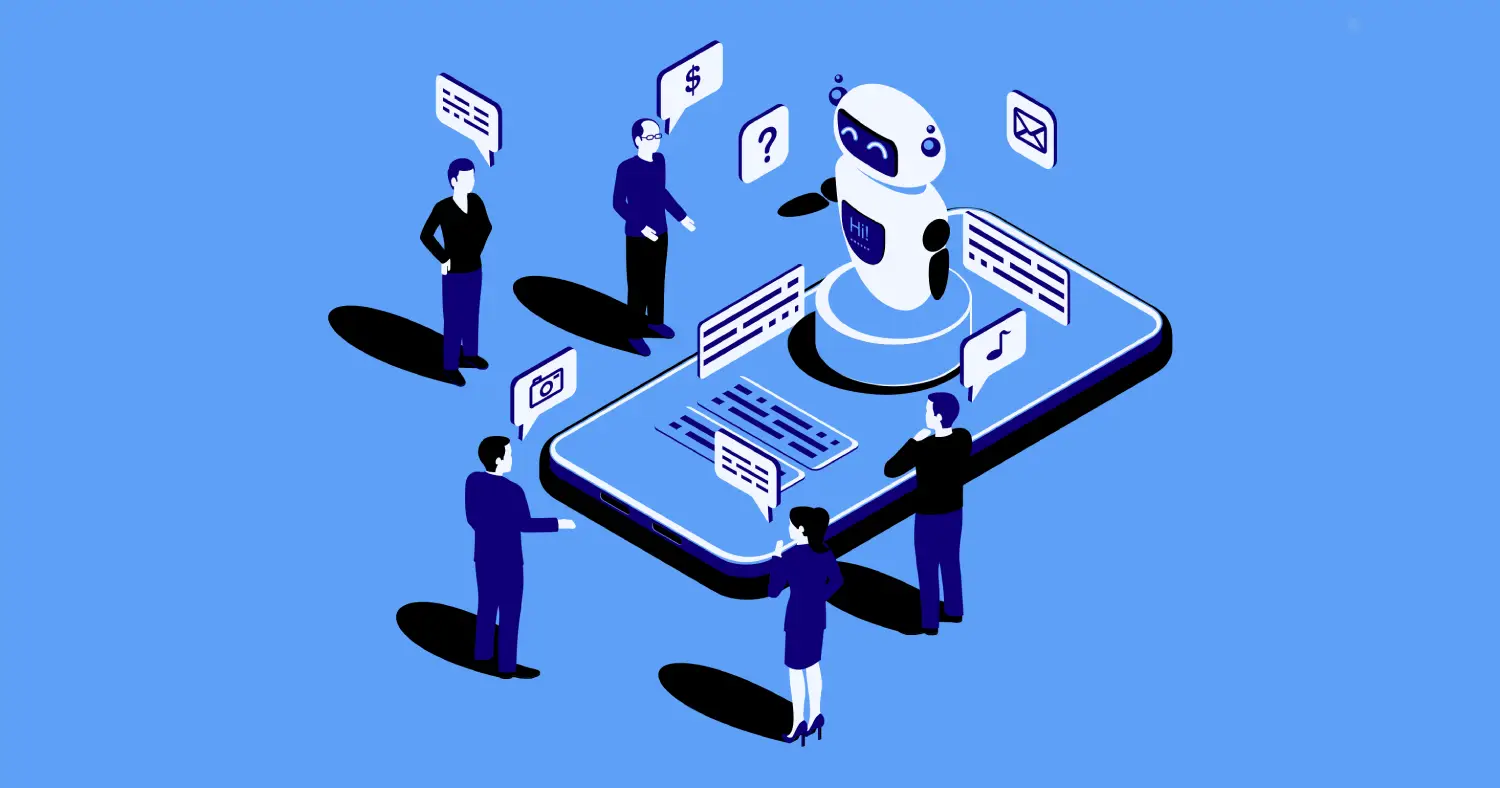
An AI chatbot is a conversational software program that uses artificial intelligence — typically natural language processing (NLP) — to understand and respond to user input in real time. The conversation is the product. The chatbot’s job is to receive a message and return a useful reply.
Modern AI chatbots range from relatively simple FAQ bots that match questions to pre-written answers, to sophisticated large language model (LLM)-powered tools like ChatGPT, Claude, and Gemini that can hold nuanced, context-aware conversations across a wide range of topics.
Key Characteristics of AI Chatbots
- Reactive: They respond to what you say; they don’t act independently
- Conversational: The primary interface is dialogue — input and output
- Single-turn or multi-turn: They can handle one-off questions or extended conversations
- Bounded: They operate within the conversation; they don’t go off and do things in the background
- Fast to deploy: Most chatbot platforms require minimal technical setup
Common Uses for AI Chatbots
- Customer service and FAQ automation
- Lead qualification on websites
- Internal IT helpdesk support
- Appointment booking assistance
- Educational tutoring and guidance
- Content drafting and brainstorming
What Is an AI Agent?
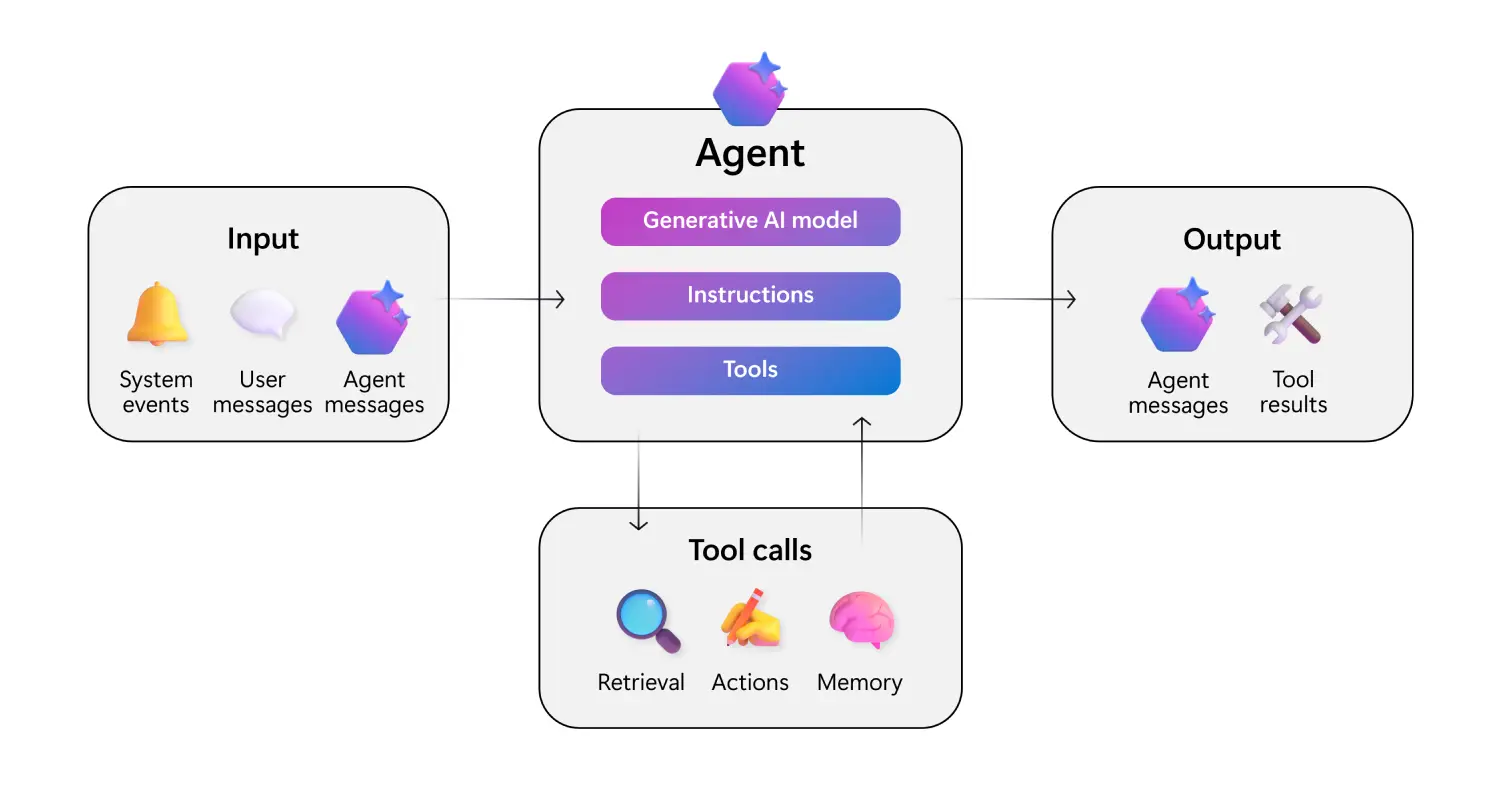
An AI agent is an autonomous system that can perceive its environment, make decisions, and take actions to achieve a goal — often across multiple steps, tools, and systems, with little or no human involvement at each stage.
Where a chatbot waits for your next message, an agent gets to work. You give it an objective, and it figures out the steps required, executes them in sequence, monitors the results, and adapts if something doesn’t go as planned.
AI agents are typically built on top of LLMs but extend far beyond conversation. They can browse the web, write and execute code, query databases, send emails, manage files, call APIs, and interact with third-party software — all as part of completing a single assigned task.
Key Characteristics of AI Agents
- Proactive: They pursue goals rather than respond to prompts
- Autonomous: They make decisions without requiring human approval at every step
- Multi-step: They break complex tasks into sub-tasks and execute them in sequence
- Tool-using: They can interact with external systems, APIs, and software
- Adaptive: They evaluate results and adjust their approach when needed
Common Uses for AI Agents
- Automated research and report generation
- End-to-end workflow automation (e.g., receive a lead, enrich the data, log to CRM, send welcome email)
- Software development and code testing pipelines
- Data extraction, analysis, and summarisation at scale
- Scheduling, inbox management, and task coordination
- Complex customer service resolution involving multiple backend systems
AI Agents vs AI Chatbots: A Side-by-Side Comparison
| Feature | AI Chatbot | AI Agent |
|---|---|---|
| Primary function | Conversation and response | Goal completion and task execution |
| Behaviour | Reactive | Proactive and autonomous |
| Task complexity | Single-step, conversational | Multi-step, often complex |
| Tool usage | Typically none or limited | Extensive — APIs, code, files, web |
| Human input required | Each exchange | Goal-setting only (ideally) |
| Memory | Session-based (usually) | Persistent across tasks |
| Decision-making | Minimal | Significant |
| Speed to deploy | Fast | Moderate to complex |
| Best for | Communication and assistance | Automation and execution |
| Examples | ChatGPT, Claude, Tidio, Intercom | AutoGPT, Devin, Claude agents, n8n AI |
How AI Agents Actually Work
To understand why AI agents are meaningfully different from chatbots, it helps to understand the loop they operate in. Most AI agents follow a variation of the perceive → plan → act → evaluate cycle:
- Perceive
The agent receives a goal or task. This might be a human instruction (“research the top five competitors in our market and summarise their pricing”) or a trigger from another system. - Plan
The agent breaks the goal into a sequence of sub-tasks. For the research example, it might plan: search the web for competitors → visit each website → extract pricing information → compare → write summary. - Act
The agent executes each step, using whatever tools it has access to — web browsers, code interpreters, email clients, databases, APIs. - Evaluate
After each action, the agent checks whether it’s making progress toward the goal. If something fails or produces unexpected results, it adjusts and tries again.
This loop continues until the task is complete — or until the agent determines it needs human input to proceed.
Real-World Use Cases: Chatbot vs Agent in Action
Scenario 1: Customer Inquiry About an Order
Chatbot approach: A customer messages your website asking where their order is. The chatbot asks for their order number, looks it up in your system, and returns the tracking status. Conversation complete.
Agent approach: The same inquiry triggers an agent that checks the order status, identifies that the shipment is delayed, automatically contacts the courier API to get an updated ETA, generates a personalised message to the customer with the new delivery window, logs the interaction in your CRM, and flags the case for a human to follow up if the delay exceeds 72 hours.
Same starting point. Very different scope of action.
Scenario 2: Generating a Competitive Analysis Report
Chatbot approach: You ask ChatGPT to summarise what it knows about your top three competitors. It draws on its training data and gives you a helpful but static response — no real-time research, no structured output, no file saved.
Agent approach: You assign an agent the task of producing a competitive analysis. It searches the web for current information, visits competitor websites, extracts pricing and feature data, cross-references recent news, structures the findings into a formatted report, and saves it to your shared drive — all without you clicking a single button beyond the initial instruction.
Scenario 3: Sales Lead Follow-Up
Chatbot approach: A chatbot on your website qualifies a lead by asking a series of questions and collecting contact details before handing off to your sales team.
Agent approach: An agent receives the lead, enriches the data by searching LinkedIn and company databases, scores the lead based on your criteria, logs it to your CRM, drafts a personalised outreach email, schedules it for the optimal send time, and notifies the relevant salesperson with a full briefing — all automatically.
Where Things Get Blurry: Agentic Chatbots
The line between AI agents vs AI chatbots is increasingly blurred as leading platforms add agentic capabilities to their conversational interfaces.
Claude, ChatGPT, and Gemini can now operate in agentic modes — browsing the web, running code, managing files, and completing multi-step tasks — while still maintaining a conversational interface. Tools like Claude’s computer use capability and ChatGPT’s Operator feature allow these models to interact with websites and applications on a user’s behalf.
This convergence means the more useful question is increasingly not “chatbot or agent?” but rather: “How much autonomy does this task require?”
Choosing the Right Tool: A Practical Framework
| If you need to… | Use a… |
|---|---|
| Answer customer questions automatically | Chatbot |
| Book appointments via conversation | Chatbot |
| Qualify leads on your website | Chatbot |
| Draft content or brainstorm ideas | Chatbot |
| Automate a multi-step business workflow | Agent |
| Conduct research and compile reports | Agent |
| Manage and respond to emails autonomously | Agent |
| Integrate data across multiple systems | Agent |
| Execute and monitor recurring tasks | Agent |
| Handle complex customer issues end-to-end | Agent |
The simple rule: If the task ends with an answer, a chatbot is usually sufficient. If the task ends with something done, you likely need an agent.
What This Means for Small and Medium Businesses
For most SMBs, AI chatbots are the natural starting point. They’re accessible, affordable, quick to deploy, and immediately useful for customer service, lead capture, and basic automation.
AI agents represent the next level — and they’re becoming more accessible rapidly. Platforms like n8n, Make, Zapier AI, and AgentGPT are bringing agentic workflows within reach of non-technical business owners. The businesses that understand the distinction between AI agents vs AI chatbots now will be best positioned to adopt agents effectively as the tools mature.
The competitive advantage isn’t just in using AI — it’s in using the right kind of AI for each job.
Key Risks to Understand
Neither chatbots nor agents are without limitations. Being clear-eyed about the risks matters, especially as autonomy increases.
Chatbot risks:
- Poor performance if not properly trained on your specific content
- Hallucinations — confidently wrong answers
- Inability to handle complex or sensitive issues without human escalation
Agent risks:
- Over-reliance — removing humans from workflows entirely can introduce fragility
- Unintended actions — agents that take wrong turns can cause real-world consequences (sending incorrect emails, deleting files, making unintended purchases)
- Security exposure — agents with broad system access are a larger attack surface
- Lack of transparency — it can be harder to audit what an agent did and why
The more autonomy you grant an AI system, the more important your guardrails, monitoring, and escalation protocols become.
FAQs: AI Agents vs AI Chatbots
-
What is the simplest way to explain AI agents vs AI chatbots?
Chatbots answer questions. Agents complete tasks. A chatbot tells you the weather; an agent books your travel based on the forecast.
-
Are AI agents just more advanced chatbots?
Not exactly. They share underlying technology but differ in purpose. Agents are designed for autonomy and action; chatbots are designed for conversation and response.
-
Can a chatbot become an agent?
Some platforms now offer both modes. ChatGPT, Claude, and Gemini can operate agentically when given the right tools and permissions — blurring the traditional boundary.
-
Are AI agents safe to use in a business?
With proper guardrails, yes. Define clear boundaries for what the agent can and cannot do, monitor its actions, and maintain human oversight for high-stakes decisions.
-
What are the best AI automation tools for small businesses?
For chatbots: Tidio, Intercom, Freshdesk. For agents and automation: n8n, Make, Zapier AI, and AgentGPT are popular accessible options.
-
Do AI agents require coding skills to set up?
Increasingly, no. Platforms like Make and n8n offer visual workflow builders. More complex custom agents may still require developer involvement.
-
How much do AI agents cost compared to chatbots?
Chatbot platforms typically start at $20–$50 CAD/month. Agent platforms vary widely — from free tiers to usage-based pricing. Complex custom deployments can cost significantly more.
-
Can AI agents work while I sleep?
Yes — that’s one of their core advantages. Agents can run autonomously on schedules or triggers, executing tasks without any human input after the initial setup.
-
What’s the difference between an AI agent and automation software like Zapier?
Traditional automation follows fixed rules. AI agents can reason, adapt, and make decisions — handling situations that weren’t explicitly pre-programmed.
-
What industries benefit most from AI agents?
Sales and marketing, legal, finance, e-commerce, healthcare administration, software development, and any field involving high volumes of structured, repeatable tasks.
-
Can AI agents make mistakes?
Yes, and the consequences can be more significant than a chatbot error because agents take real-world actions. Strong testing, monitoring, and defined boundaries are essential.
-
What is an agentic workflow?
A sequence of automated actions carried out by an AI agent to complete a complex goal — such as researching, drafting, reviewing, and sending a document, all without human intervention at each step.
-
Is ChatGPT a chatbot or an agent?
At its core, it’s a chatbot. But with tools enabled (web browsing, code execution, file management), it operates agentically. The distinction is increasingly about mode, not the model itself.
-
How do AI agents decide what to do next?
They use the underlying LLM to reason about the current state of the task, evaluate what’s been done, and determine the most logical next action — similar to how a person would think through a problem step by step.
-
What should I implement first — a chatbot or an agent?
Start with a chatbot. It’s lower risk, faster to deploy, and delivers immediate value. Once you understand your workflow bottlenecks, identify where agents could automate multi-step processes.
Final Thoughts
The distinction between AI agents vs AI chatbots isn’t academic — it has real implications for how you build, buy, and deploy AI automation tools in your business or workflow.
Chatbots are the right tool for conversation. Agents are the right tool for execution. Understanding where one ends and the other begins is the foundation for making smart, strategic AI decisions — now, and as the technology continues to evolve at a rapid pace.
Start with the task. Then choose the tool.