
“Software sentiment has rarely been lower, with AI casting a shadow of uncertainty for the sector.” — Jefferies Analyst Charles Brennan, January 2026
Let’s call it what it is.
For the last two years, AI has been producing slop. Half-baked chatbot responses. Mediocre code that barely worked. “AI-powered” features that were really just glorified autocomplete bolted onto existing software. Companies slapped “AI” on their product pages and called it innovation.
That era is over.
The Moment Everything Changed
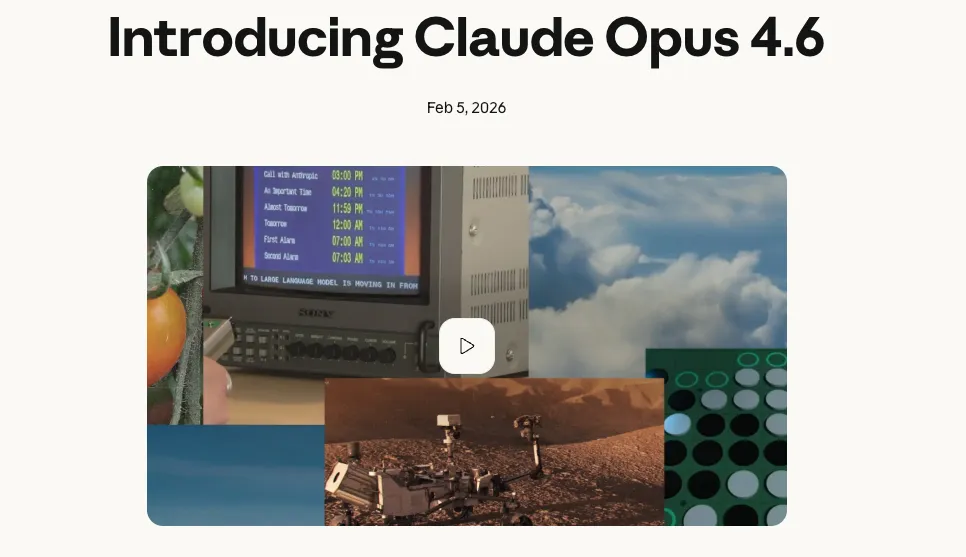
On February 5, 2026, Anthropic released Claude Opus 4.6 — and it wasn’t just another model update. This thing builds production-grade applications. It plans like a senior engineer, debugs its own code, and can process a million tokens of context in a single pass.
But Anthropic isn’t alone. Here’s where every major player stands right now:
The AI Arms Race — February 2026 Snapshot
| Model | Company | What It Actually Does | Why It Matters |
| Claude Opus 4.6 | Anthropic | Builds full apps, agent teams work in parallel, 1M token context | Outperformed GPT-5.2 by 144 Elo points on real-world knowledge work |
| GPT-5.2 + Codex | OpenAI | Autonomous coding agent, desktop app for managing AI worker teams | Still the most widely used — 77% of enterprises run it in production |
| Gemini 3 Pro | 2M token context, 750M+ monthly users, cloud revenue up 48% | Largest native context window in the industry | |
| Kimi K2.5 | Moonshot AI | Trillion-parameter model, visual coding from screenshots, free tier | Trained for just $4.6M — frontier AI at near-zero cost |
| DeepSeek V4 | DeepSeek | 1M+ token context, runs on consumer-grade hardware (dual RTX 4090s) | Open-weight model — deploy on your own infrastructure, no API fees |
The playing field has fundamentally shifted. Building custom software is no longer a luxury reserved for companies with $200K engineering budgets. It’s becoming accessible to anyone who can describe what they need.
The SaaS Bloodbath — By The Numbers
Wall Street has noticed. And it’s panicking.
Stock Performance: Software Giants vs. The Market (Past 12 Months)
| Company | Stock Move (1 Year) | What Happened |
| ServiceNow | 📉 -50% | Dropped 11% in one day despite raising revenue outlook |
| Salesforce | 📉 -40% | Lost 14% in five days after Anthropic’s Cowork launch |
| Adobe | 📉 -35% | Caught in the broader SaaS selloff |
| SAP | 📉 -30% | Plunged 15% on weak cloud outlook |
| S&P 500 Software Sector | 📉 -18% | While the broader S&P 500 climbed +9% |
| Oracle | 📈 +4% | Only major SaaS stock in the green — infrastructure play |
Sources: Yahoo Finance, Reuters, Salesforce Ben — data as of early February 2026
J.P. Morgan analysts called it a “vicious cycle of depressed valuations.” One market strategist at B. Riley Wealth summed it up: “We’re looking at a lot of software names that are seen as companies that may well be disrupted.”
Art Hogan wasn’t sugarcoating it either — he called the week “Software-mageddon.”
Why This Is Different From Every Other “Disruption” Story
Every few years, someone declares the death of something. SaaS has survived cloud migration fears, open-source threats, and the 2022 tech pullback. So why is this time different?
Because AI isn’t competing with these companies on features. It’s competing on the entire business model.
Think about what most SaaS products actually do — and what AI does now:
| What SaaS Does | What AI Does Now |
| CRM stores customer data and displays dashboards | AI builds you a custom CRM tailored to your exact sales process — in hours |
| Project management tools organize tasks and deadlines | AI generates a workflow system that matches how your team actually works |
| Analytics platforms pull numbers and generate charts | AI connects to your data, analyzes it, and builds the visualization you need on demand |
| Compliance tools check documents against rules | Claude Cowork now reviews contracts, triages NDAs, and handles compliance workflows |
| Per-seat licensing, feature gates, vendor lock-in | No subscriptions. No feature gates. Your system, your rules. |
The “seat count pressure” is real. AI will increase productivity and lower the number of subscriptions companies need. That’s the optimistic scenario for SaaS — the pessimistic one is that companies stop buying subscriptions altogether.
The Three Types of SaaS Companies Right Now
The Dead Walking
Companies that primarily organize and display data with minimal proprietary logic. If your core product is essentially a nicer UI on top of a database, AI can replicate that. The subscription model collapses when the customer realizes they can build a better, more personalized version themselves.
The Pivoting
Companies scrambling to embed AI into their existing products. Salesforce launched Agentforce — reportedly its fastest-growing organic product ever. ServiceNow spent billions on acquisitions including Moveworks ($2.85B), Armis ($7.75B), and Veza ($1-2B). They’re trying to become AI platforms rather than just software tools. Some will succeed. Many won’t move fast enough.
The Infrastructure Layer
Companies providing the pipes that AI itself runs on. Cloud providers, data platforms, GPU manufacturers. These aren’t being disrupted — they’re being supercharged. Oracle is the only major software stock that’s actually up. Alphabet just reported cloud computing revenue soaring 48%.
The Numbers That Should Keep SaaS CEOs Up at Night
| Metric | Number | Context |
| Average enterprise AI spend (2025) | $7 million | Up 180% from $2.5M in 2024 |
| Projected enterprise AI spend (2026) | $11.6 million | Another 66% jump expected |
| Enterprises using Anthropic in production | 44% | Up from near-zero in March 2024 |
| Claude Code revenue run rate | $1 billion | Reached in just 6 months after launch |
| Enterprises using OpenAI in production | 77% | Still the market leader by adoption |
| Cost to train Kimi K2.5 (frontier model) | $4.6 million | Frontier AI is getting cheap, fast |
Sources: Andreessen Horowitz (Jan 2026 survey), CNBC, Anthropic
What This Means For You — Right Now
If you’re running a business, here’s the real conversation you need to have:
- Stop overpaying for generic solutions. That $50/seat/month CRM? AI can build you a custom one that matches your actual sales process, integrates with your exact tools, and costs a fraction of the annual license.
- Start thinking in workflows, not features. Old model: find a SaaS tool that sort of does what you need, then adapt your process to fit the software. New model: describe your actual workflow, and let AI build the tool around it.
- Invest in AI literacy, not just AI tools. The competitive advantage isn’t having access to AI — everyone will have that. It’s knowing how to use it to build systems that give your business an edge.
The Timeline Is Shorter Than You Think
Most analysts are talking about 4-5 year disruption cycles. That’s too conservative.
| Category | Disruption Window | Why |
| Data management & organization tools | 2-3 years | AI already replicates these workflows today |
| Reporting & analytics platforms | 2-3 years | AI generates custom dashboards and analysis on demand |
| Complex enterprise workflows (ERP, deep integrations) | 3-4 years | Requires more domain-specific training, but models are catching up fast |
| Infrastructure & platform companies | Minimal risk | AI needs them to run — they get stronger, not weaker |
The models keep getting better at an accelerating pace. Opus 4.6 came months after Opus 4.5. OpenAI releases Codex iterations weeks apart. Chinese labs are training frontier models for under $5 million. The gap between “AI can sort of do this” and “AI does this better than the software I’m paying for” is closing fast.
The End of Slop, The Start of Something Real

Here’s what excites us at Optas AI about this moment.
AI isn’t just generating mediocre content and half-working code anymore. It’s building real systems, automating real workflows, and creating real value. The models have crossed a threshold where the output isn’t just “impressive for AI” — it’s genuinely good.
That means the conversation shifts from “look what AI can do” to “what should we actually build with it?”
The companies that thrive in this new landscape won’t be the ones with the best SaaS subscriptions. They’ll be the ones who understand their own workflows deeply enough to build customized AI systems around them — or partner with people who can help them do exactly that.
The slop is over. The real work begins now.
Sources: CNBC, Yahoo Finance, Reuters, Salesforce Ben, Anthropic, Moonshot AI, Andreessen Horowitz, J.P. Morgan, Jefferies. Stock data as of early February 2026.