
How communities, grids, and climate policy are shaping AI’s real limits
When people talk about the future of artificial intelligence, they usually talk about models: how large they are, how fast they run, how close they seem to human reasoning. That conversation misses the most important constraint on AI’s future.
AI does not live in the cloud.
It lives in buildings.
Those buildings—data centers—sit on land, pull electricity from local grids, consume water for cooling, and require permits from city councils and utility commissions. And increasingly, they are running into something no algorithm can optimize away: politics.
The next limits on AI will not come from math. They will come from communities, power lines, and climate rules.
Quietly, and often locally, the rules of AI expansion are being rewritten.
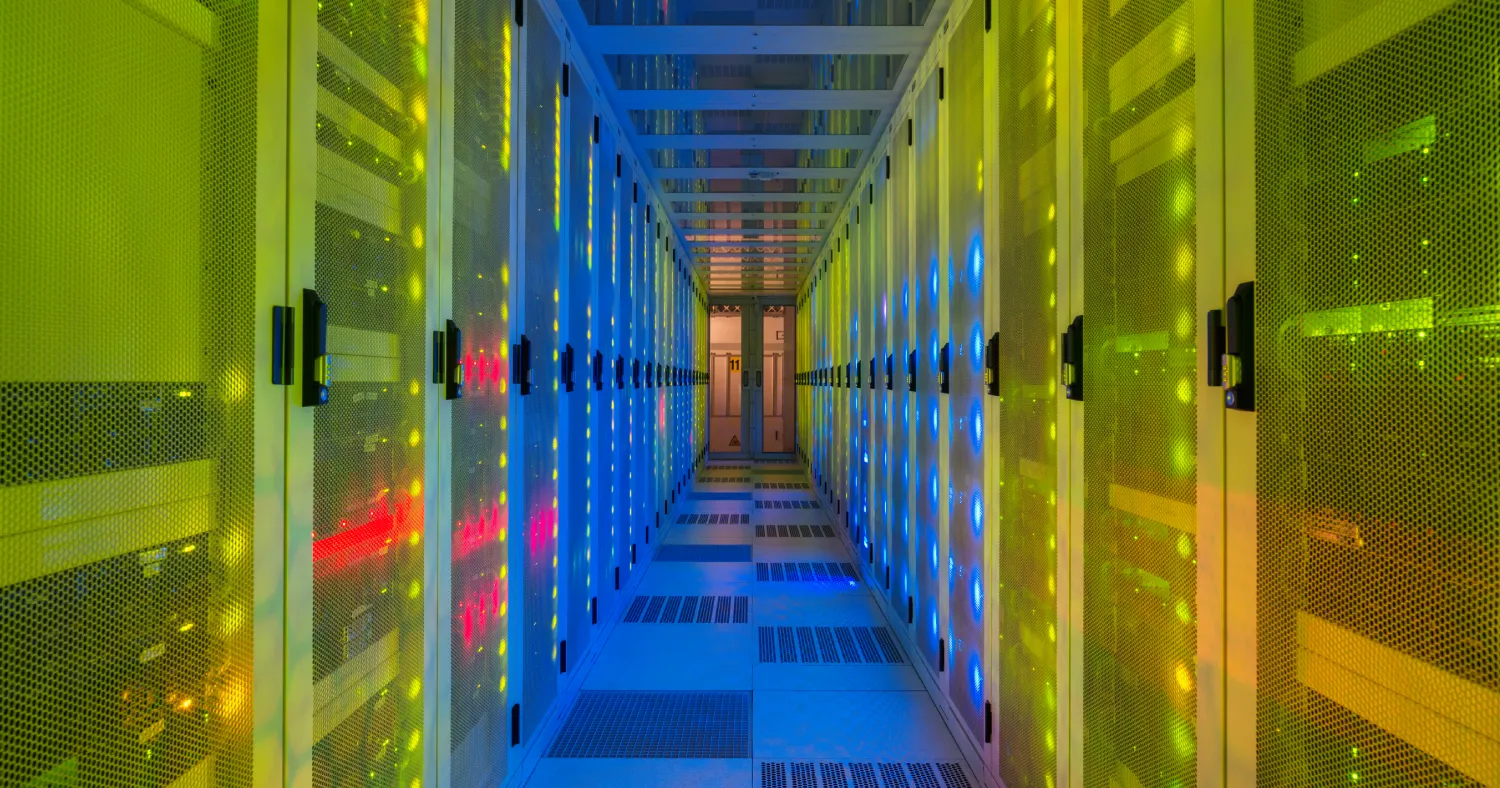
AI’s Physical Reality: Power, Not Prompts
Every AI interaction feels weightless. You type a sentence, get an answer, move on. But behind that interaction sits a chain of physical infrastructure: servers, cooling systems, transformers, transmission lines.
As AI usage grows—from chatbots to image generation to enterprise tools—data centers are scaling from large to enormous. A single modern AI-focused data center can demand as much electricity as a small city. That demand is not theoretical. It shows up as real load requests on regional grids.
This is where friction begins.
Most power grids were not designed to absorb sudden, concentrated demand from one customer. When a hyperscale data center proposes a new campus, utilities must answer hard questions:
- Is there enough generation capacity?
- Are transmission lines sufficient?
- Who pays for upgrades?
- What happens to rates for existing customers?
In several U.S. states, utilities have warned regulators that approving too many data center projects too quickly could strain reliability or raise prices. Similar concerns are emerging in parts of Europe and Asia.
AI progress now depends on the slowest-moving systems in modern society: grid planning and public utility regulation.
Grid Politics: When AI Meets Scarcity
Electric grids operate on balance. Supply must meet demand, second by second. When a data center arrives requesting hundreds of megawatts, that balance is disrupted.
Consider a common scenario.
A county approves a large data center project, attracted by promises of investment and tax revenue. Months later, the local utility announces that serving the project will require major transmission upgrades—new substations, new lines, multi-year construction. Those costs may be spread across all ratepayers.
Suddenly, residents are asking:
Why are we paying more so a global tech company can run servers?
This question has delayed or blocked projects in multiple regions. In some cases, regulators have paused approvals until utilities can prove upgrades won’t harm residential customers. In others, local governments have imposed moratoria on new data centers altogether.
None of this is anti-technology. It’s resource triage.
When power is finite, politics decides allocation.
Water: The Constraint People Understand Instantly
Electricity debates can feel abstract. Water does not.
Many data centers use water-intensive cooling systems, especially in warmer climates. Even when consumption is modest relative to agriculture or industry, the symbolism matters. In water-stressed regions, any new industrial user attracts scrutiny.
Examples keep repeating:
- In parts of the American Southwest, residents have protested data centers planned near drought-affected communities.
- In Europe, proposals near agricultural regions have triggered backlash over perceived competition for water resources.
- In Latin America, municipal leaders have rejected projects outright after environmental groups raised aquifer concerns.
Water opposition is powerful because it is local, visible, and emotionally legible. People may not understand megawatts, but they understand wells running dry.
This has forced companies to rethink cooling designs—moving toward air cooling, closed-loop systems, or water recycling. These solutions exist, but they cost more. And higher costs change where and how AI infrastructure is built.
Efficiency is no longer just an engineering goal. It’s a political requirement.
Renewables: The Green Promise Meets Local Reality
Most major AI companies promise that their data centers will run on renewable energy. Often, this is true in a contractual sense: companies sign long-term agreements to buy wind or solar power.
But renewable infrastructure has politics of its own.
Wind farms face opposition over land use and aesthetics. Solar projects raise concerns about farmland conversion. Transmission lines connecting renewable sites to data centers encounter permitting delays.
In some regions, communities opposing data centers have also opposed the renewable projects meant to supply them. From a local perspective, both look like industrial expansion imposed from outside.
This creates a paradox:
The push for “green AI” can inflame opposition on two fronts at once.
The lesson is uncomfortable but clear. Climate alignment is necessary, but it does not replace community consent.
The New NIMBY: Data Centers as Local Flashpoints
Data centers used to be invisible. Now they are politically legible.
Residents raise familiar but potent concerns:
- Few permanent jobs relative to land use
- Increased traffic during construction
- Noise from cooling equipment
- Strain on infrastructure without proportional local benefit
These are not fringe objections. They are increasingly voiced by mainstream voters and local officials.
As a result, approval processes are slowing. Conditions are tightening. Negotiations are becoming more complex.
AI expansion is learning the same lesson every large infrastructure project eventually learns:
You cannot scale faster than public trust.
How Companies Are Adapting (With Mixed Success)
Facing these pressures, companies are adjusting strategy.
Some are shifting data centers to colder climates where cooling is easier and water use is lower. Others are breaking massive campuses into smaller, distributed sites to reduce local impact. Some are investing directly in grid upgrades or community benefit programs to secure approval.
There are also more controversial adaptations.
On-site gas generation can reduce grid strain but raises climate and air quality concerns. Backup diesel generators ensure reliability but provoke environmental objections. Battery storage helps smooth demand but adds cost and complexity.
Every solution solves one problem while creating another.
What’s notable is how much effort now goes into negotiation rather than innovation. Permits, zoning hearings, environmental impact statements—these are becoming as important to AI timelines as chip availability.
Why This Shapes AI’s Trajectory
All of this has two major consequences for AI’s future.
First, AI geography will fragment. Compute-heavy workloads will concentrate where power is cheap, abundant, and politically acceptable. Latency-sensitive services will move closer to users. Uniform global access will be harder to achieve.
Second, scale will give way to efficiency. When power and water are constrained, brute-force growth becomes expensive. This pushes the industry toward smaller models, specialized systems, and better utilization of existing infrastructure.
The next leap in AI capability may come not from bigger models, but from smarter deployment under real-world constraints.
The Uncomfortable Truth
We like to imagine AI limits as technical. A model hits a wall. A chip shortage slows progress. Those stories feel clean.
The real limits are messier.
They involve town hall meetings. Utility rate cases. Environmental reviews. Lawsuits over land use. Competing visions of economic development.
These are not bugs in the system. They are the system.
AI is becoming infrastructure. And infrastructure is governed by politics.
Why This Is Not Bad News
It’s tempting to see this friction as an obstacle. It’s better understood as a filter.
Politics forces tradeoffs into the open. It asks who benefits, who pays, and who decides. It slows reckless expansion and rewards careful design.
If AI is going to be as foundational as electricity or the internet, it must pass through the same social process those technologies did. Not just invention—but negotiation.
The future of AI will be shaped less by what engineers can build, and more by what societies are willing to host.
And that future is being decided quietly, one data center at a time.