
Quick Answer: AI chatbots for customer service are software programs that use artificial intelligence to automatically handle customer inquiries, bookings, complaints, and FAQs — 24/7, without human intervention. Small businesses use them to cut response times, reduce staffing costs, and improve customer satisfaction.
What Are AI Chatbots for Customer Service?
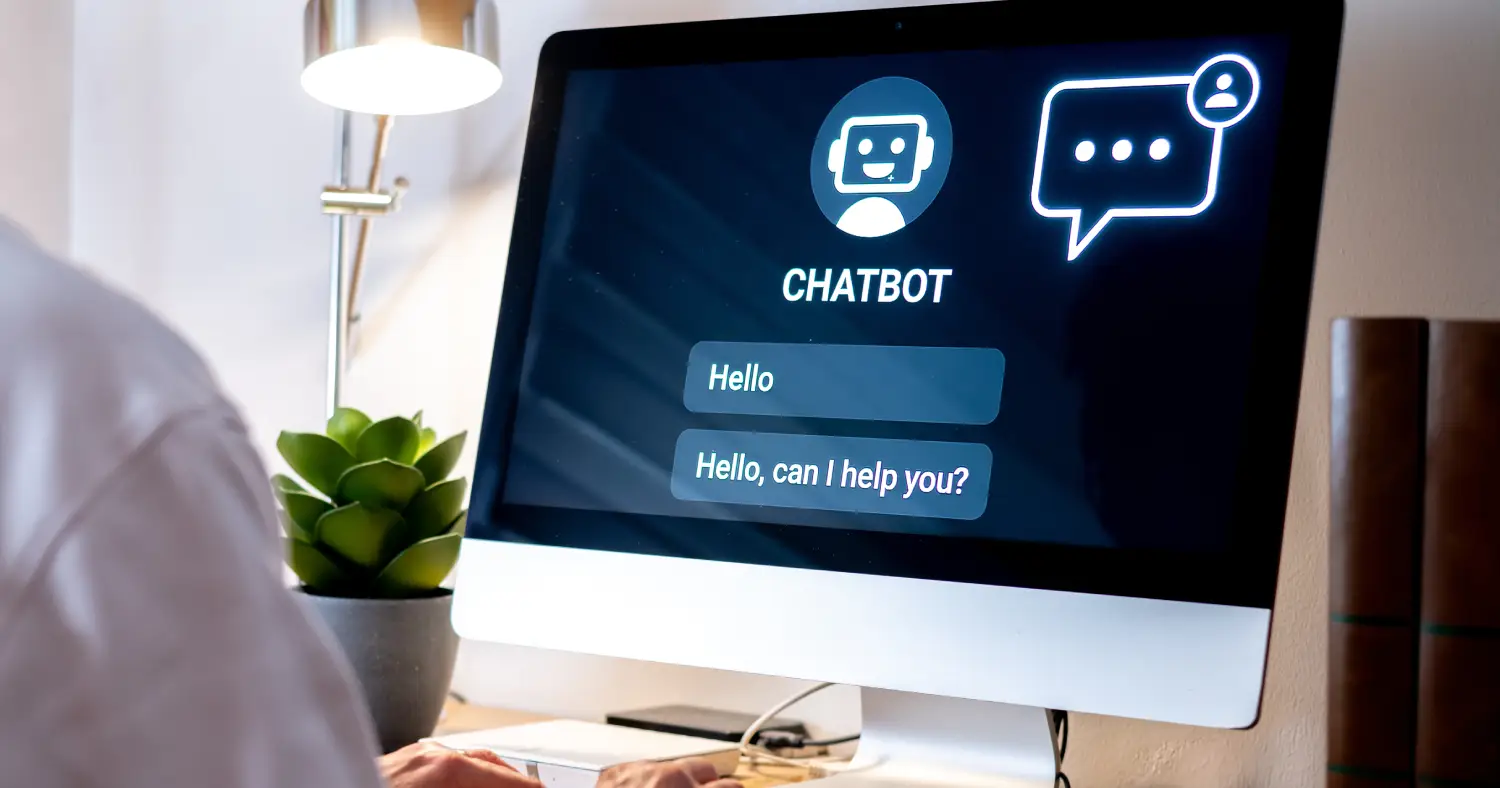
AI chatbots for customer service are automated conversational tools powered by artificial intelligence — specifically natural language processing (NLP) — that can understand, respond to, and resolve customer queries in real time. Unlike older rule-based bots that followed rigid scripts, modern AI chatbots learn from conversations, interpret intent, and deliver increasingly human-like responses.
For small businesses, this technology has shifted from a “nice to have” to a genuine competitive advantage. Whether you’re a local retail shop, a boutique hotel, a law office, or an e-commerce store, AI chatbots for customer service can handle the repetitive, time-consuming inquiries that eat up your team’s day — freeing staff to focus on higher-value work.
Why Small Businesses Are Turning to AI Chatbots
Running a small business means wearing a lot of hats. Customer service is critical, but hiring a full support team around the clock simply isn’t realistic for most SMBs. That’s where small business customer service automation steps in.
Here’s what’s driving adoption:
- Rising customer expectations: Customers now expect responses within minutes, not hours.
- Staff limitations: Most small businesses can’t afford 24/7 support teams.
- Affordability: Chatbot platforms have become significantly more accessible, with many offering plans starting under $50/month CAD.
- Ease of setup: No-code and low-code platforms mean owners can deploy bots without developers.
Key Statistics Worth Knowing
| Metric | Data |
|---|---|
| Businesses using chatbots for customer support | 58% (Salesforce, 2024) |
| Customer queries that can be handled by bots | Up to 80% (IBM) |
| Average response time improvement with chatbots | From hours to under 1 minute |
| Cost reduction in customer service with AI | 30% on average (Juniper Research) |
| SMBs reporting higher customer satisfaction post-chatbot | 64% (Tidio, 2024) |
How AI Chatbots for Customer Service Actually Work
Understanding the mechanics helps you choose the right tool. Modern AI chatbots for customer service typically rely on one or more of the following technologies:
1. Natural Language Processing (NLP)
NLP allows the chatbot to interpret what a customer is asking — even if they phrase it in an unexpected way. For example, “I need to change my order” and “Can I swap what I bought?” would both be understood as a modification request.
2. Machine Learning (ML)
Over time, the chatbot learns from past conversations and improves its accuracy. The more it interacts, the better it gets.
3. Large Language Models (LLMs)
Tools like ChatGPT-powered bots can generate nuanced, contextual responses rather than pulling from a static FAQ list. This makes conversations feel far more natural.
4. Integrations
Most chatbot platforms integrate with CRMs (like HubSpot or Salesforce), e-commerce tools (like Shopify), scheduling software, and ticketing systems — so the bot can access real customer data to personalize responses.
7 Real-World Use Cases for Small Businesses
1. Answering FAQs Instantly
The most common use case. A chatbot can answer questions like store hours, return policies, shipping timelines, and pricing — instantly, any time of day. This alone can eliminate 40–60% of incoming support requests.
Example: A Toronto-based clothing boutique deploys a chatbot on its website. When shoppers ask “What’s your return policy?” the bot responds immediately with the full policy, links to the returns portal, and offers to connect with a human if needed.
2. Booking and Appointment Scheduling
Service-based businesses — salons, clinics, consultants, fitness studios — use AI chatbots for customer service to handle bookings end-to-end. The bot checks availability, collects customer details, and confirms the appointment, all without a receptionist.
Example: A Vancouver physiotherapy clinic uses a chatbot integrated with its booking software. Patients can book, reschedule, or cancel appointments via the chat widget on the website — reducing phone call volume by over 40%.
3. Order Tracking and E-Commerce Support
Online retailers use chatbots to give customers real-time order updates, process simple returns, and suggest products based on browsing history.
Example: A Shopify store selling handmade candles connects its chatbot to its order management system. Customers type “Where’s my order?” and the bot pulls live tracking data and responds in seconds.
4. Lead Qualification and Sales Support
AI chatbots for customer service can double as sales assistants. They greet visitors, ask qualifying questions, and route hot leads to your sales team — while nurturing cooler leads automatically.
Example: A Calgary-based marketing agency uses a chatbot to collect visitor contact info and ask about their business needs. Qualified leads are immediately flagged for follow-up, while others receive an automated email series.
5. Complaint Handling and Escalation
A well-designed chatbot can acknowledge complaints empathetically, collect relevant information, and either resolve the issue automatically or escalate it to the right team member — with all the context already gathered.
6. Multilingual Support
For Canadian businesses serving both English and French-speaking customers, AI chatbots can detect language and respond accordingly — no bilingual hire required.
7. After-Hours Support
When your team is offline, your chatbot isn’t. It can handle inquiries, take messages, schedule callbacks, and ensure no lead or complaint falls through the cracks overnight.
Top AI Chatbot Platforms for Small Businesses (2026)
| Platform | Best For | Starting Price (CAD/mo) | Key Feature |
|---|---|---|---|
| Tidio | E-commerce & retail | ~$29 | Shopify integration, live chat handoff |
| Freshdesk (Freddy AI) | Multi-channel support | ~$19 | Ticketing + AI automation |
| Intercom | SaaS & service businesses | ~$74 | Advanced LLM-powered responses |
| ManyChat | Social media / DM automation | ~$18 | Instagram & Facebook bots |
| Zendesk AI | Customer support teams | ~$69 | Omnichannel, robust analytics |
| Zoho SalesIQ | SMB CRM users | ~$0 (free tier) | Free plan available, Zoho integration |
| ChatBot.com | No-code builders | ~$65 | Drag-and-drop builder, easy setup |
Prices approximate and subject to change. Always confirm pricing on the provider’s website.
How to Choose the Right AI Chatbot for Your Small Business
Not every chatbot is built the same. Here’s what to evaluate before committing to a platform:
- Integration with your existing tools
Does it connect with your CRM, e-commerce platform, or booking software? A chatbot that operates in isolation is far less powerful than one embedded in your workflow. - Ease of setup and customization
Look for no-code or low-code builders if you don’t have a developer on staff. Most quality platforms offer visual workflow builders. - Handoff capability
The best AI chatbots for customer service know when to pass a conversation to a human. Make sure the platform supports seamless live-chat handoff. - Language support
For Canadian businesses, bilingual (English/French) support can be a significant asset. - Analytics and reporting
You should be able to track resolution rates, common queries, drop-off points, and customer satisfaction scores. - Pricing and scalability
Start with what fits your budget, but check whether the platform can scale as you grow. Some charge by conversation volume, others by seat.
Common Mistakes Small Businesses Make with AI Chatbots
Even with good tools, implementation mistakes can undermine results. Watch out for these pitfalls:
Deploying without training the bot
An AI chatbot for customer service needs to be trained on your specific products, policies, and FAQs. A generic out-of-the-box bot without customisation will frustrate customers.
No human escalation path
Customers get angry quickly when a bot can’t help them and there’s no way to reach a human. Always build in a clear escalation option.
Ignoring performance data
Your chatbot will tell you exactly where it’s struggling — if you review the analytics. Failing to iterate based on data is a missed opportunity.
Over-automating
Not every interaction should be handled by a bot. Sensitive issues like billing disputes or complaints about service quality often need a human touch.
The ROI of AI Chatbots for Customer Service
For small businesses, return on investment is the bottom line. Here’s how the numbers typically break down:
| Cost Category | Without Chatbot | With Chatbot |
|---|---|---|
| Support staff hours/week | 20–40 hrs | 5–15 hrs |
| Avg. response time | 4–24 hours | Under 1 minute |
| Cost per support interaction | $6–$12 CAD | $0.25–$1 CAD |
| Customer satisfaction rate | 65–72% | 78–88% |
| After-hours inquiries resolved | ~0% | 60–80% |
A small business spending $400/month on chatbot software but saving 20 hours of staff time per week (at even $20/hour) is saving $1,600/month in labour — a 4x return before considering revenue from improved lead capture and customer retention.
Getting Started: A 5-Step Rollout Plan
Step 1: Identify your top 10 customer service questions
Pull from your email inbox, social DMs, and phone call logs. These become your chatbot’s initial training data.
Step 2: Choose a platform that fits your tech stack
Refer to the comparison table above and take advantage of free trials.
Step 3: Build and train your bot
Use your FAQ list to create response flows. Add your brand voice and personalise the bot’s name and greeting.
Step 4: Test before going live
Have team members test every major flow and edge case. Fix gaps before customers encounter them.
Step 5: Monitor, measure, and improve
Review analytics weekly for the first month. Identify unanswered questions and continuously expand the bot’s knowledge base.
FAQs: AI Chatbots for Customer Service
-
What is an AI chatbot for customer service?
An AI chatbot for customer service is a software tool that uses artificial intelligence to automatically handle customer questions, complaints, and requests in real time, 24/7.
-
Are AI chatbots affordable for small businesses?
Yes. Many platforms offer plans starting at $20–$30 CAD/month. Free tiers are also available through tools like Zoho, SalesIQ and Tidio.
-
Can a chatbot replace my customer service team?
Not entirely. Chatbots handle repetitive, high-volume queries well, but human agents are still needed for complex, sensitive, or high-stakes interactions.
-
How long does it take to set up a chatbot?
With no-code tools, a basic chatbot can be live in as little as a few hours. A fully trained, integrated bot may take 1–2 weeks to deploy properly.
-
Will customers know they’re talking to a bot?
AI chatbots are transparent tools. It’s recommended practice — and sometimes legally required — to disclose that a customer is interacting with automated software.
-
What industries benefit most from AI chatbots?
Retail, hospitality, healthcare, legal services, real estate, and e-commerce see the highest ROI, but virtually any service-based business can benefit.
-
Can chatbots handle complaints effectively?
Yes, for straightforward issues. They excel at collecting information, acknowledging concerns, and routing complaints — but complex disputes often need a human.
-
Do AI chatbots support French for Canadian businesses?
Many platforms support multilingual functionality, including English and French — a key consideration for businesses operating across Canada.
-
What’s the difference between a chatbot and live chat?
Live chat connects customers with human agents in real time. A chatbot automates those conversations using AI. Many platforms offer both, with seamless handoff.
-
How do I measure if my chatbot is working?
Track metrics like resolution rate, average response time, customer satisfaction scores (CSAT), handoff rate, and volume of queries handled without human intervention.
-
Are AI chatbots secure for handling customer data?
Reputable platforms comply with data privacy regulations. For Canadian businesses, verify PIPEDA compliance and ask vendors about data residency and encryption practices.
-
Can I integrate a chatbot with my Shopify store?
Yes. Platforms like Tidio, Gorgias, and Re:amaze are purpose-built for Shopify integration and can access order data directly.
-
What happens when the chatbot can’t answer a question?
A well-built chatbot will acknowledge the limitation, offer to escalate to a human agent, or collect the customer’s contact info for a follow-up.
-
Do I need technical skills to run a chatbot?
Not with modern no-code platforms. Most offer visual builders that require no coding knowledge to build, update, and manage.
-
Can chatbots proactively reach out to customers?
Yes. Many platforms support proactive messaging — for example, triggering a chat when a visitor has been on the pricing page for 30+ seconds, or sending post-purchase follow-ups.
Final Thoughts
AI chatbots for customer service are no longer the exclusive domain of large enterprises. Today, small businesses across Canada are using them to deliver faster, more consistent, and more scalable customer experiences — without dramatically increasing their overhead.
The key is choosing the right platform, training it properly, and treating it as a living tool that improves over time. Start small, measure everything, and expand capabilities as your confidence grows.
Whether you’re handling 50 inquiries a month or 5,000, small business customer service automation can give you a meaningful edge — and keep your customers coming back.